
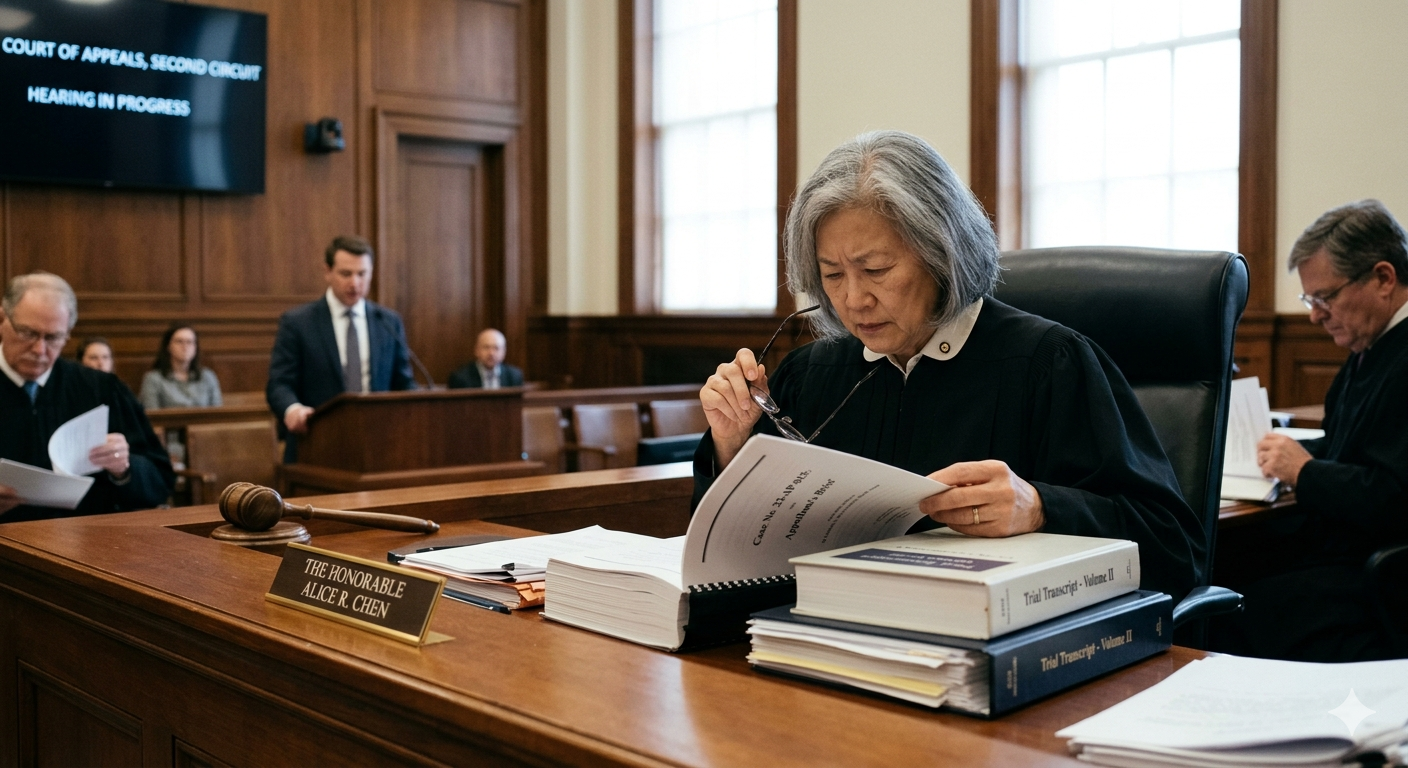

The Florida trial courts' decisions are subject to appeal to a higher Court. This happens when a litigant (the Plaintiff or Defendant) believes the trial court made a mistake and that the mistake should be corrected.
The mistake believed to have been made by the trial court can be based in the facts of the case ("that is not what the evidence showed"), the law ("that is not what the statute or other source of law says"), or both.
A recent opinion from the 4th District Court of Appeal (which takes such claimed mistakes from the circuit trial courts in Broward, Palm Beach, Martin, St. Lucie, Indian River and Okeechobee Counties) dealt with an alleged mistake of law.
The person who was claiming the mistake (the Appellant), was representing herself. Without an attorney to help her write the appeal, she resorted to Artificial Intelligence ("AI"), as we can expect many people do or might start doing.
The decision came back from the 4th District Court of Appeal, disagreeing with her; the appeals court found no error by the trial court.
But for the use of Al, there probably would not have been any thing actually written. The 4th would have just said something like, "we find no error."
However, the Al tool had "hallucinated" what other, prior District Courts' had said. In the paperwork submitted by the Appellant, she had cited certain old cases saying that these cases were opposite of what the trial court had ruled. She claimed that the trial court had used the wrong law and that she should have won.
The problem, as you might have guessed, is that the cases did not exist - some of them not at all. Other cases she cited to the 4th were actual cases, but did not say what her Al asserted they said.
Here is the reason everyone needs to know this: Self-represented litigants are held to the same standards as an attorney.
Obviously, attorneys are not allowed to make up old cases and present them to a Court (trial or otherwise). If we do use Al to help find the old cases, we absolutely have to check to make sure that they are real and do exist. If we do not, we can be sanctioned - maybe even having to pay the other side's attorney's fees which, for an appeal, can easily be in the tens of thousands of dollars! That is a scary prospect. The self-represented litigant could have faced sanctions - just like her attorney would have had she had one.
In this particular case (Roussell v. Bank of New York Mellon, Etc., decided March 11, 2026), the appellate court did NOT sanction her, but easily could have. This was probably a decision issued as a warning to all.
Share this article