

One of the most absurd things for law students to grasp in that all-important first year, is the idea of what can be considered "ambiguous." (Ambiguity is "an uncertainty of meaning or intention, as in a contractual term or statutory provision.")
If language is deemed "ambiguous," what happens next depends on where this ambiguity is found.
The ambiguity can be subject to interpretation of a Court - if it is in a statute. If the Court has to use interpretation, there are several tools they can use to derive meaning and intent from the writers of the statute. This search for "Legislative intent" is sometimes easy if there is a part of the statute stating specifically what the Legislature was trying to do. Without that, however, judges will look at what the plain and simple language would mean. If that does not help, then they can look at the surrounding language, the other terms, what might be excluded, what would make the language harmonious with the other laws on the topic... All kinds of factors are examined to determine what the law is trying to say.
However, if the ambiguity is found in a contract, the options are different and depend on whether the ambiguity is an obvious mistake ("Art is the Buyer" and then, later "The Buyer, Bert" is written in the same contract) or whether it is a more sneaky ambiguity.
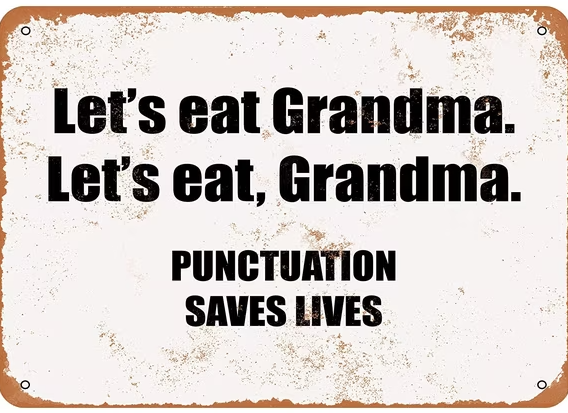
Here is where the comma comes into play.
The Tariff of 1872 misplaced a comma, resulting in fruits not being subject to the tax. The tariff was trying to say that fruits and fruit plants would be subject to the tariff, but, by placing a comma where it did not belong, fruits become tax free and only fruit-bearing plants were subject to the Tariff.
Another is a case where there would be no overtime payments for work done for "...drying, marketing, storing, packing for shipment or distribution" of foods. Because there was no comma between "shipment" and "distribution," the Court found it questionable if "shipment and distribution" were one joint act or two separate ones. The result? Workers got their overtime payments.
Now, we have a case, decided July 22, 2026 by our appellate court, that a comma found between "construed according to the laws of the State of Florida" and "with venue in Collier County," created an ambiguity allowing venue to be set in another County (Martin). The comma controlled and there is an ambiguity, allowing the action to be filed in Martin County, rather than Collier.
The benefits of filing in one county verses another, well, that would be an entirely different article.
Just remember: Watch those punctuation marks folks! Ambiguities may be found everywhere!
Share this article