
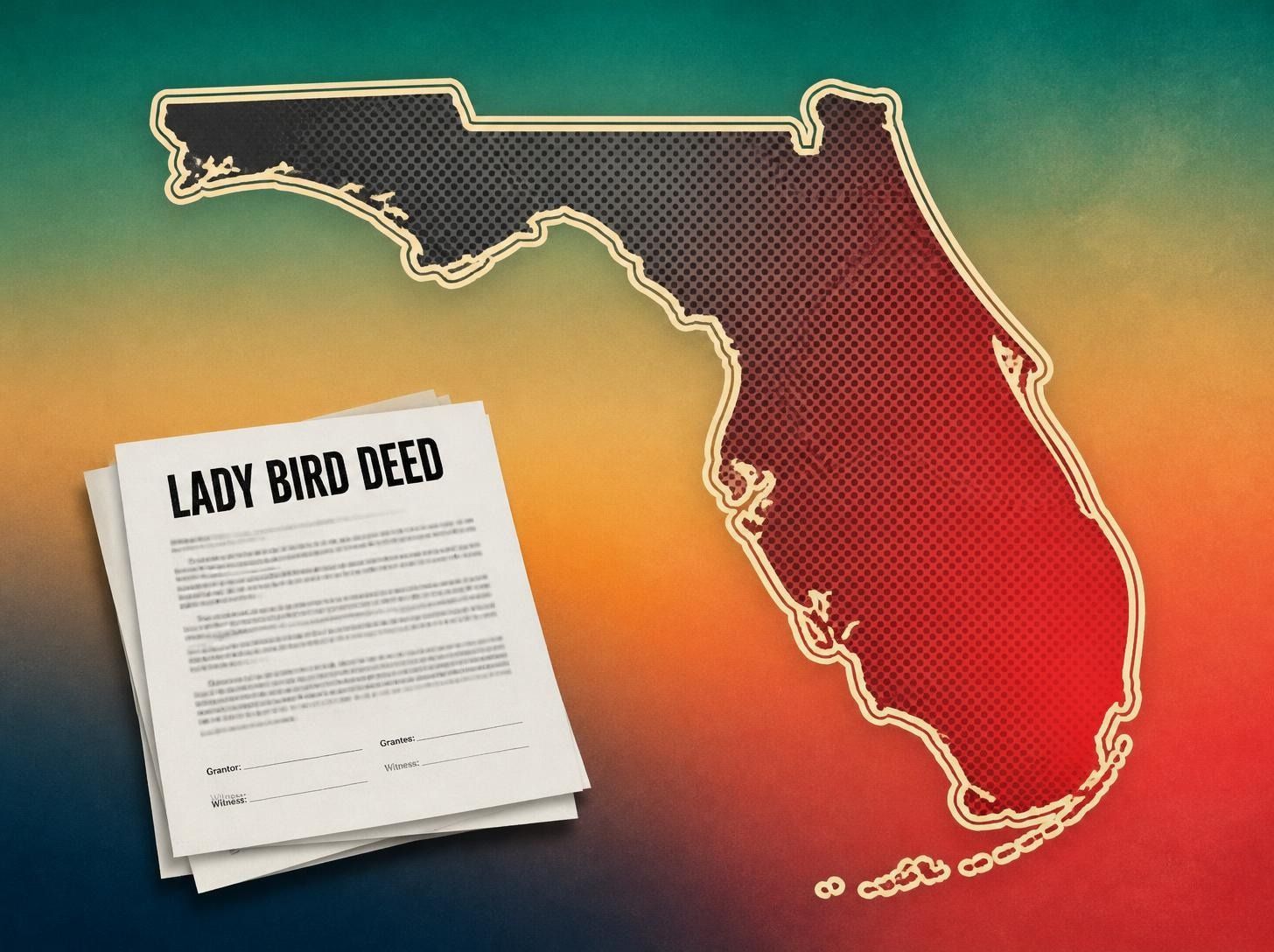
The time for using unregulated Lady Bird Deeds might be ending.
By Portia B. Scott, J.D., L.L.M. • September 24, 2026

The time for using unregulated Lady Bird Deeds might be ending.

For years and years, Florida lawyers have been able to use “Lady Bird Deeds* (Enhanced Life Estate Deeds) for helping clients avoid probate, for Medicaid Planning, retirement planning, for all kinds of useful purposes. That open-season

of uses may soon be coming to an end.


Lady Bird Deeds are only recognized in a few states: Florida, Texas, North Carolina, Michigan, West Virginia and Vermont.


Briefly (promise!), a Lady Bird Deed is a document which is used to transfer real estate from the owner to another person (we will call him “Billy”) at the time of the owner’s death but which keeps the owner in complete control of the property until death, with the flexibility to change their mind.


There is a dispute, which is undoubtedly about to be resolved one way or the other, about what kind of interest Billy has. One side says that Billy has a recognized ownership interest which the owner can take back. The other side says that Billy has no interest until the owner dies and then, only if the owner did not change their mind.


This exact question may soon be decided by our Appellate Court (Florida’s 4th District Court of Appeal). The case centers around whether a widow can make a claim on her dead husband’s homestead property if it were held under a Lady Bird Deed, leaving the house to the dead husband’s son, Billy. (Billy is not the widow’s son.)


Some of the property appraisers and tax collectors believe that Billy has an interest when the Lady Bird Deed is recorded. This is why, for Medicaid planning, the attorney will include language in the Lady Bird Deed which says something akin to “Billy has no rights to the property until the owner dies.” It is pretty hard to read that and not think that Billy’s rights only exist when the owner dies. This influences Medicaid’s “look back” period as well as avoiding probate.


If you have ever considered using this amazingly versatile tool for your own estate/Medicaid plan, you should move quickly while we still have the opportunity to get your specific Deed “grand-fathered” in.


*Named for Lady Bird Johnson, wife of President Lyndon Johnson who, himself, was rumored to have used this kind of deed to transfer property to Lady Bird upon his death. It is, however, just a myth. 

Share this article
By Portia B. Scott, J.D., L.L.M. • July 22, 2026
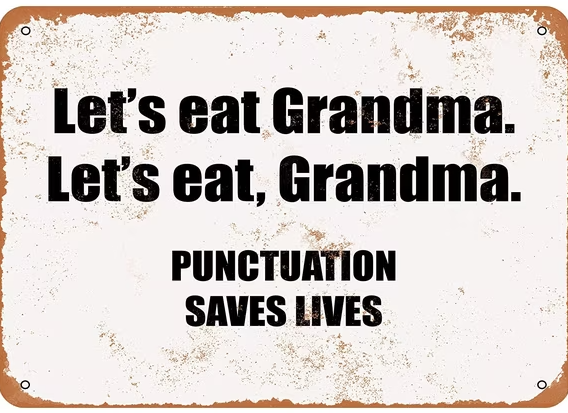
One of the most absurd things for law students to grasp in that all-important first year, is the idea of what can be considered "ambiguous." (Ambiguity is "an uncertainty of meaning or intention, as in a contractual term or statutory provision.") If language is deemed "ambiguous," what happens next depends on where this ambiguity is found. The ambiguity can be subject to interpretation of a Court - if it is in a statute. If the Court has to use interpretation, there are several tools they can use to derive meaning and intent from the writers of the statute. This search for "Legislative intent" is sometimes easy if there is a part of the statute stating specifically what the Legislature was trying to do. Without that, however, judges will look at what the plain and simple language would mean. If that does not help, then they can look at the surrounding language, the other terms, what might be excluded, what would make the language harmonious with the other laws on the topic... All kinds of factors are examined to determine what the law is trying to say. However, if the ambiguity is found in a contract, the options are different and depend on whether the ambiguity is an obvious mistake ("Art is the Buyer" and then, later "The Buyer, Bert" is written in the same contract) or whether it is a more sneaky ambiguity. Here is where the comma comes into play. The Tariff of 1872 misplaced a comma, resulting in fruits not being subject to the tax. The tariff was trying to say that fruits and fruit plants would be subject to the tariff, but, by placing a comma where it did not belong, fruits become tax free and only fruit-bearing plants were subject to the Tariff. Another is a case where there would be no overtime payments for work done for "...drying, marketing, storing, packing for shipment or distribution" of foods. Because there was no comma between "shipment" and "distribution," the Court found it questionable if "shipment and distribution" were one joint act or two separate ones. The result? Workers got their overtime payments. Now, we have a case, decided July 22, 2026 by our appellate court, that a comma found between "construed according to the laws of the State of Florida" and "with venue in Collier County," created an ambiguity allowing venue to be set in another County (Martin). The comma controlled and there is an ambiguity, allowing the action to be filed in Martin County, rather than Collier. The benefits of filing in one county verses another, well, that would be an entirely different article.  Just remember: Watch those punctuation marks folks! Ambiguities may be found everywhere!
By Portial B. Scott, J.D.,L.L.M. • May 31, 2026
Appellate Gloves Are Off: Warnings Appear to Be Over with Our Courts Over Unverified Artificial Intelligence Arguments and Filings This is the third straight article I have written on this topic - but things keep moving and changing. In my first two articles on this topic (the use of Al in Court filings), I explained that our appellate Court (the "4th") has been issuing warnings about the use of Artificial Intelligence in drafting and filing papers with the Court if the Al is not double-checked against reality. In those articles, I explained that the 4th was giving warning after warning against filing unauthenticated Al-generated motions, petitions, appeals, complaints, briefs, memoranda of law. Now, in three separate rulings on May 27, 2026, the 4th has stopped issuing warnings and has started imposing sanctions and, for attorneys, referrals to the Florida Bar for disciplinary action. In the first case,a self-represented litigant was found to have abused the courts. by filing some 90 Al-generated motions against his former wife. The 4th observed that the arguments made in his appeal to the 4th were not based on actual cases, rules of procedure or, if they were actual cases, such arguments were not found in those cases. As a self-represented litigant, the 4th cannot refer him to the bar for discipline. So, what can the 4th do? They can prohibit him from being able to file any more papers in our courts without having a Florida Bar -licensed attorney sign off on the papers. This is a drastic sanction since access to the Courts is of such high value in America. We want people to have access to the Courts - so they don't settle their disputes at high noon in the middle of the street with firearms or have it out with brawls. The idea behind requiring such sanctions is that an attorney will think twice before endangering their right to practice law. The attorney requirement is expensive, too. Still, when a litigant abuses the courts system, there must be some way to safeguard the integrity of the Court. The idea of an attorney cherishing their rights to practice, however, may not always be 100% accurate. (See below) The second case involved an attorney who filed an "emergency" motion, citing cases which do not stand for the concept of what the attorney claimed. By way of example of what I mean, if the attorney claimed that Roe v. Wade stands for the proposition that income tax is unconstitutional, that would be claiming something that just is not so. Importantly, it is verifiably not so. One need only look at the Roe v. Wade decision to see it is not correct. The 4th said that, whether the case is misrepresented as meaning something it does not or even does not exist at all, it does not matter. Both are equally wrong. The attorney was reported to the Florida Bar for disciplinary inquest. in the third case, an attorney filed a brief which included references to what has happened at trial and quoted from the transcript of the trial. However, since appeals ususally have to have a copy of the transcript included when the appeal is filed (so the 4th can read what actually happened and not just take the filer's word for it), it soon became obvious that what the attorney said had been said in Court was not true. This might have been a result of poor prompting by the attorney to the Al or intentionally misdirecting the Al. It also could be that the transcript of the trial was fed to Al and Al misunderstood what had happened - due to not understanding fully the meaning of certain legal terms. On top of that, Al also "hallucinated" legal authority and the attorney filed it with the 4th, even apparently invoking some of it in oral argument before the 4th, doubling his sins. In the end, how it happened did not matter. The 4th found that the lawyer cited imaginary legal authorities as if they were law and the 4th reported him to the Florida Bar for discipline action, putting his law license in jeopardy.  I want to make it clear: the 4th does not prohibit the use of Al in filings, but everyone must ensure that the citations to legal authority, the statement of the facts and all manner of statements are accurate, real and not the figments of Al's desire to provide a winning argument at the cost of truth.